On October 19, 2025, four masked thieves entered the Louvre Museum in Paris in broad daylight. In just seven minutes, they made off with eight priceless crown jewels from the Galerie d’Apollon.
The incident serves as a stark reminder of the utter failure of the systems designed to protect our rich past. In today’s world of AI, it always feels like the crown’s digital twin, algorithm, sensors, etc. should have been ready in advance, the algorithm could have saved the Louvre.
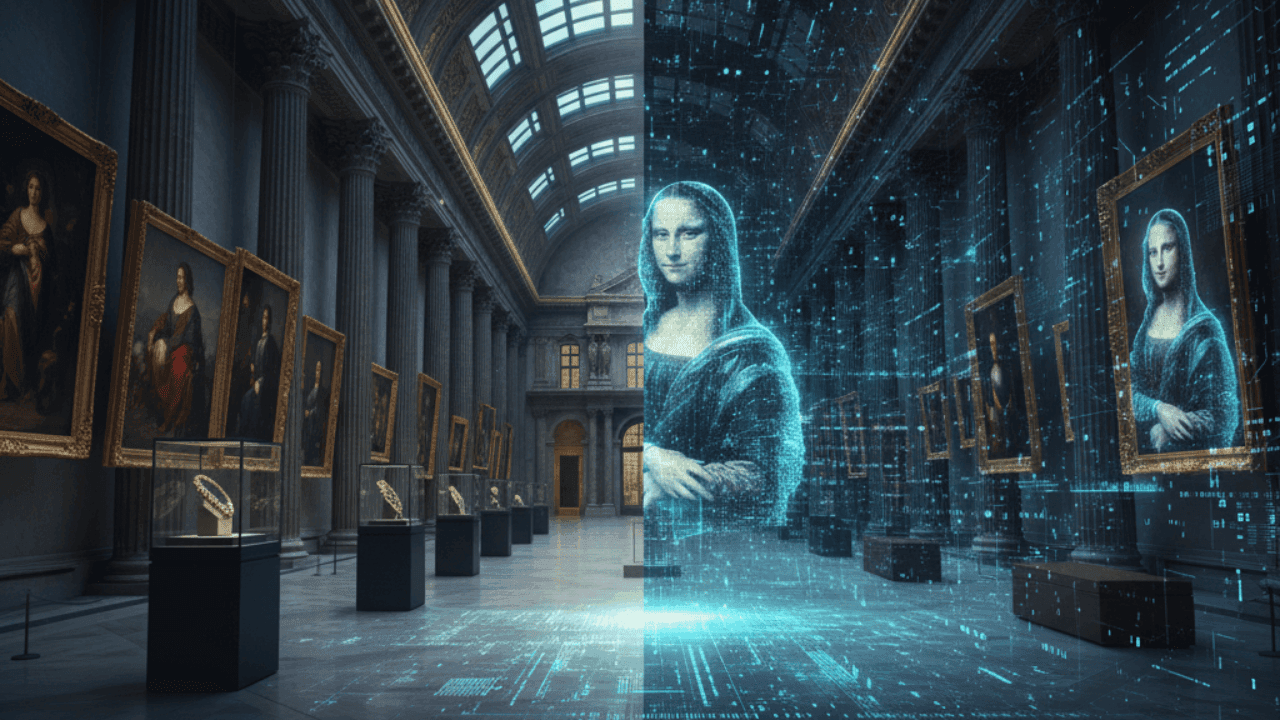
In this article, we’ll trace the nature of the robbery, and we’ll learn how artificial intelligence, digital mapping, and blockchain can change today’s advanced security system. In today’s world, heritage isn’t just painted or jeweled – it needs to be protected by software code.
A Heist in Minutes
It took just 7 minutes. According to police and museum officials, the thieves used an extended ladder attached to the truck to climb up to the front of the museum and disabled or thwarted the alarm system. They then broke into the two display cases and fled on motorbikes.
Their target : The tiaras, necklaces, brooches and earrings of Empress Eugenie, Empress Marie-Louise and Queen Marie-Amelie- items whose value is measured not only in euros but also in heirlooms. This was not a random vandalism and occupation. It bears all the marks of a well-planned attack on our glorious history.
Where Code Could Meet Canvas: Digital Twins & Predictive AI
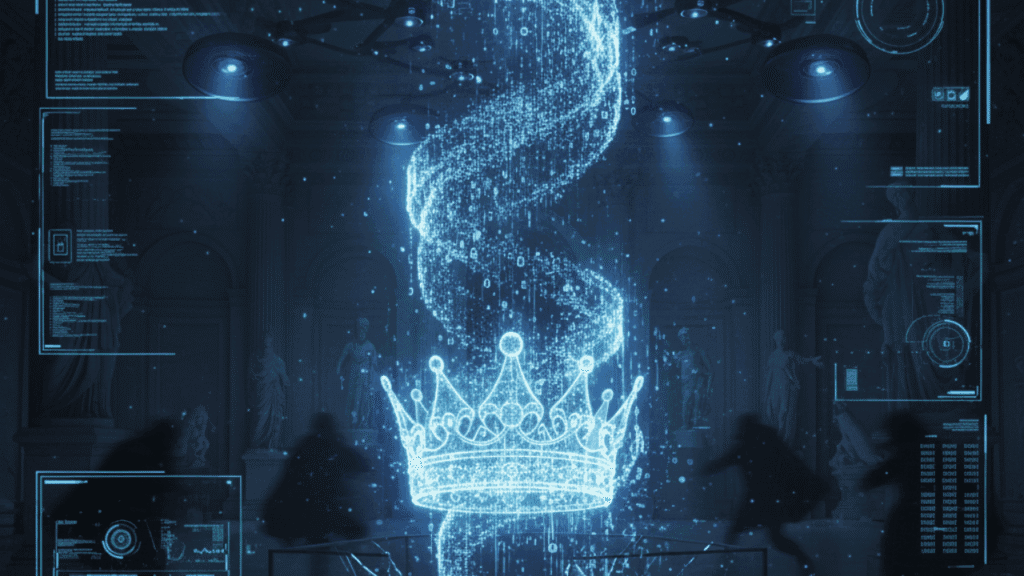
Imagine if every artwork in the Louvre had a digital twin. It would be a high-quality 3D version- linked to sensors. It would monitor position, vibration, temperature, and motion in real time. Now imagine that twin trained on thousands of museum-security incidents. It could detect unusual patterns. It couldn’t just “trigger an alarm.” It can also report “CCTV angle change detected” and “display case door has exceeded force threshold.” It can also identify potential internal access attempts. What if the warehouse of threats had become a data-driven guard?
Thieves exploited a blind spot: an exterior facade, thought to be less risky because of the “museum hours.”
Traditional alarms and security personnel respond only after a burglary has occurred, more effectively than before.
A digital algorithm combined with door sensors, frame strain gauges, and thermal cameras can identify the use of a ladder and external scaffold lift as a high-anomaly incident. These technologies work together, helping to ensure safety and efficiency, and aiding in the detection of potential threats.
In short: code can respond faster than breaking glass.
From Physical to Virtual: Tracing the Jewels in Code
Once stolen, the value of gems is slippery. The eight priceless items can be melted down, recut, or sold on illicit networks.
In this situation blockchain-based provenance systems step in:
Each item is registered in a tamper-resistant ledger at the moment of display.
If a crown, necklace, or brooch disappears and enters a resale chain, the transaction hits the ledger’s “stolen” flag.
Global Customs, insurers, and collectors around the world can ask the chain: “Is this item clean?”
When thieves try to recut or hide gems, a digital trail is left behind. The canvas becomes code; the material becomes metadata.
The Broader Cultural Algorithm: Why Museums Must Upgrade
The Louvre robbery has not only made headlines, but also sparked a new debate. France has ordered a security review of major cultural sites.
Why should this matter to us beyond Paris? Because heritage is now moving into the digital world, and with it comes some risk.
Over-tourism and understaffing have stretched museum systems thin.
The same technologies that protect us from digital threats can be used to protect against physical threats.
Models: sensor-networks, AI-based anomaly detection, digital twin layering, blockchain genesis.
By incorporating culture into the code stream, we create a new defense.
Path Forward: Building the Next-Gen Museum
Here’s a blueprint of how institutions can evolve:
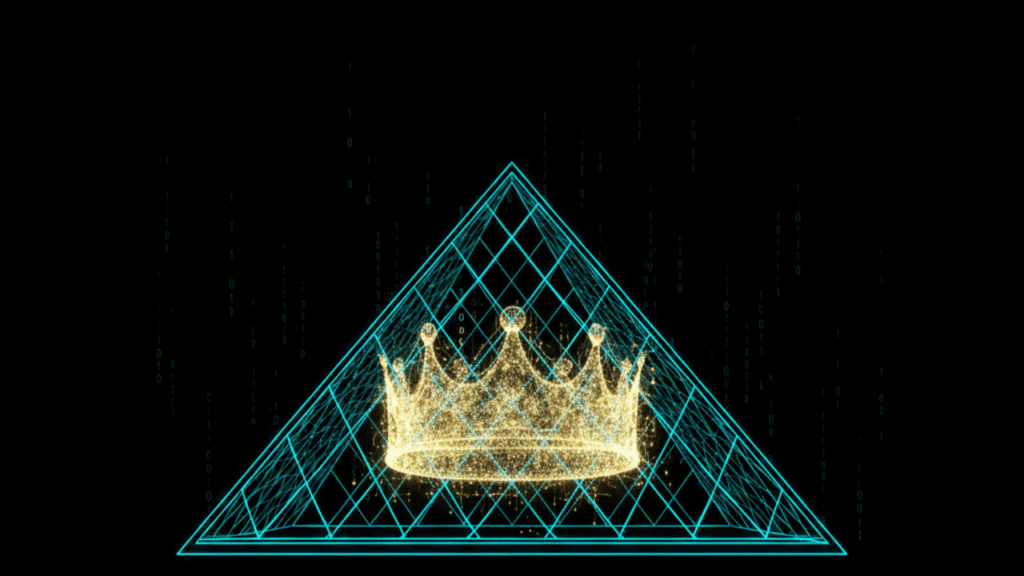
Digital twins of artefacts: 3D scans + metadata linked to ledger.
Global provenance ledger: integrate museum database, customs, insurers, collectors.
Crowdsourced monitoring: visitor apps that quietly flag odd behaviour, feed anonymised internal alerts.
AI forensic archive: machine-learning trained on past heists to anticipate next ones. In a sense, culture moves from being static “paint on wall” to “data in stream”.
Heritage, Algorithms & Responsibility -
The Louvre theft has touched the hearts of millions—not just because it exposed a precious jewel, but because it exposed a key symbol of human civilization as vulnerable. When the canvas was in danger, the code needed to protect it was missing. The incident has dealt a major blow to people’s faith in art, which is a deep concern for our cultural heritage.
But this moment could be a pivotal one. If we combine heritage with digital security—because we don’t want to transform art into technology, but rather protect the true meaning of art—then the next time there’s a robbery, algorithms will really be able to protect the Louvre.
Because culture is more valuable than gold—but in a networked world, you can protect it not only with guards and glass, but also with code.
Shiba is a contributing writer and software engineer who examines the intersections of technology, politics, and culture. With a background in global affairs and entrepreneurship, he brings a forward-thinking lens to how innovation reshapes societies and the stories we tell about progress. His work often bridges the human and the algorithmic — exploring what happens when code begins to write history itself.
Disclaimer:
Disclosure: This article is for general information only and is based on publicly available sources. We aim for accuracy but can’t guarantee it. The views expressed are the author’s and may not reflect those of the publication. Some content was created with help from AI and reviewed by a human for clarity and accuracy. We value transparency and encourage readers to verify important details. This article may include affiliate links. If you buy something through them, we may earn a small commission — at no extra cost to you. All information is carefully selected and reviewed to ensure it’s helpful and trustworthy.
Very nice post. I just stumbled upon your blog and wanted to say that I’ve really enjoyed browsing your blog posts. In any case I will be subscribing to your feed and I hope you write again soon!
Best spot for sports and slots combined. I love that I don’t have to switch accounts to bet on my favorite team. idbolaslot88 is definitely a top-tier choice.
Such a friendly community and a very professional platform. I feel safe depositing my funds here. Check out phjilibetdonnalyn if you want a secure place to play.
I’ve tried a few sites lately but this one feels much smoother. The loading speed is impressive and the interface is very intuitive. Definitely checking out bdnbajje more often!








Leave a Comment