

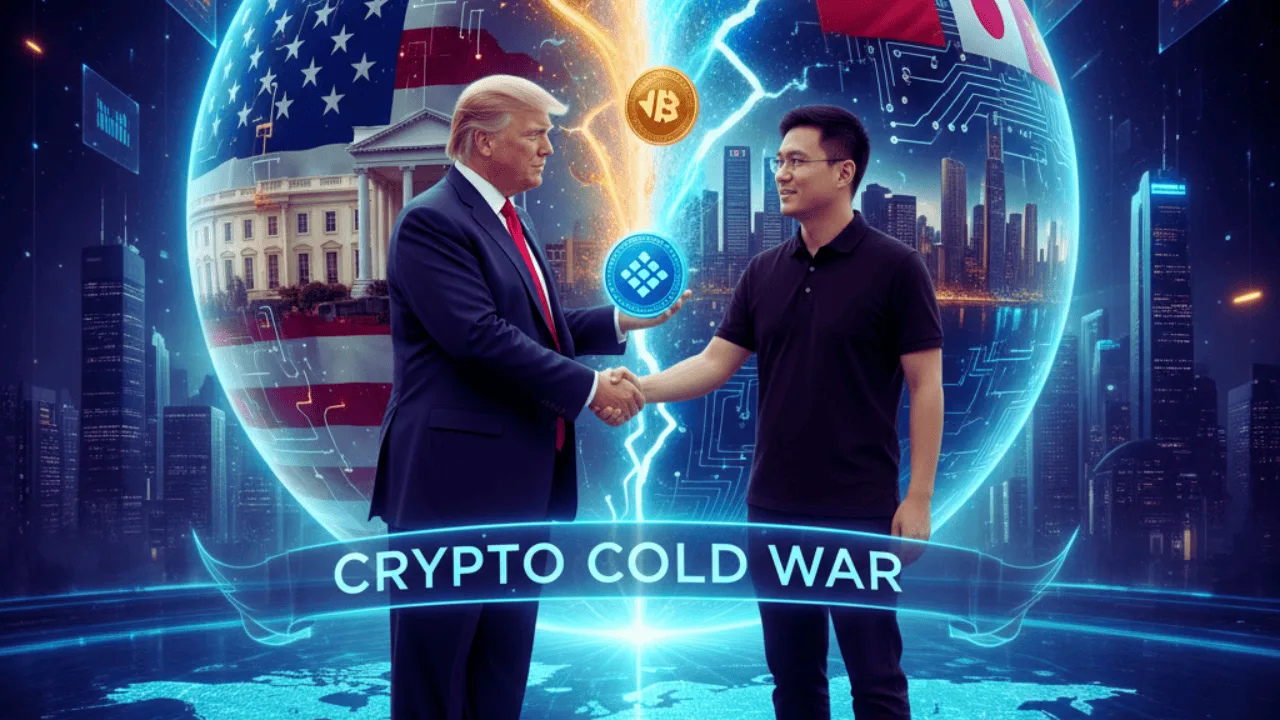
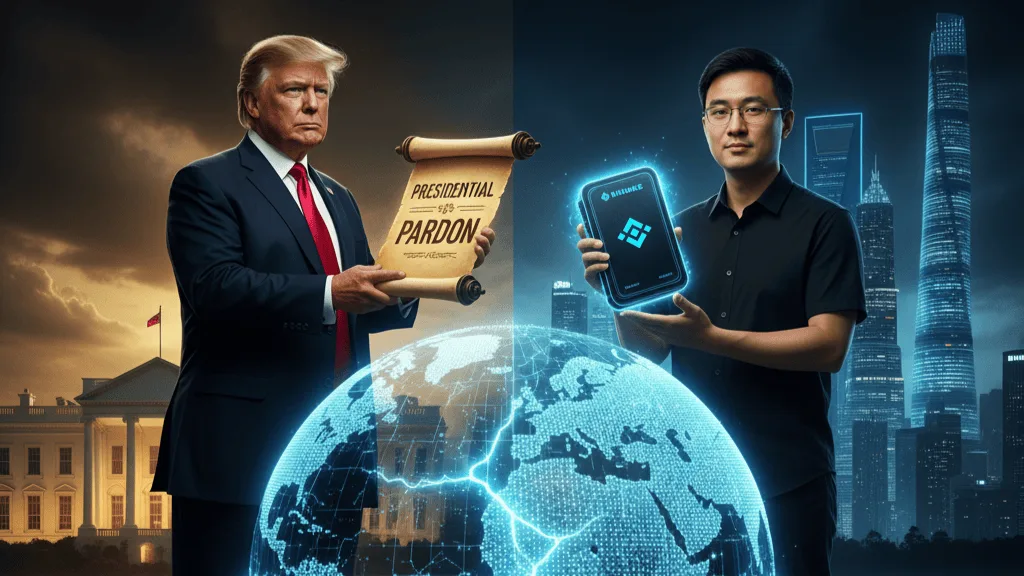
On October 23, 2025, President Donald Trump pardons Binance founder Changpeng Zhao. This event was a significant step in world politics. It marked the beginning of the next economic rivalry. It was the beginning of a crypto cold war that extends beyond money. This war affects geopolitics, national security, and technological superiority. This was one of most significant Binance news 2025.
Changpeng Zhao pardon: From Courtroom to Crypto Comeback
In 2023, Zhao was convicted of failing to maintain anti-money laundering controls, with the US Department of Justice imposing a $4.3 billion fine on the finance giant. Zhao was personally ordered to pay $50 million and serve four months in prison.
Trump’s New Financial Doctrine: Trump’s crypto policy
Trump prioritized 3 related actions after reelected into the office:
1.Launching a stablecoin, USD1, pegged to the US dollar through World Liberty Financial.
2. Proposing a national digital reserve, which would give American banks regulated access to crypto-based assets.
3. Reversing multiple Securities and Exchange Commission (SEC) enforcement actions against major crypto exchanges.



Trump’s message is clear: the U.S. will not regulate crypto into exile—it will dominate it.
The Strategic Timing: Changpeng Zhao’s pardon
The pardon wasn’t planned. Several reports say that Zhao’s camp had been pushing for it for almost a year, using connections to crypto-friendly policymakers and advisors in Trump’s inner circle. Just weeks after a UAE-based sovereign fund linked to Trump’s new crypto platform promised to invest $2 billion, this move happened. It shows that there may be a way for American and Gulf interests to work together on digital currency infrastructure.
In terms of geopolitics, this pardon could be the Trojan Horse of crypto geopolitics—a way to reclaim influence over the exchange networks shaping the world’s commerce.
The Crypto Cold War Explained
To comprehend the magnitude of this shift, it is essential to consider it within a historical framework. Washington has seen digital assets as risky speculative technology for years. At the same time, China, Singapore, and Dubai made themselves into crypto havens by launching state-backed blockchain frameworks and attracting businesses from around the world.
The fact that Trump has presented this as a component of his goal to establish “America as the global crypto capital” is no accident.
Binance, headquartered in the Cayman Islands but run through an intricate global network, thrived precisely because Western regulators hesitated. Zhao’s pardon now tilts that balance.
It is no coincidence that Trump has framed this as part of his mission to make “America the global crypto capital.” Behind the rhetoric lies an effort to:
Repatriate digital capital that fled to Asia and the Gulf.
Regain control of stablecoin infrastructure before countries like China weaponize digital currencies geopolitically.
Rebuild the U.S. as the world’s blockchain nucleus, where innovation is protected rather than prosecuted.
CZ’s Redemption and Reemergence
For Changpeng Zhao, the pardon is more than just personal revenge — it’s an invitation to return to the table he once made. According to reports, he might once more serve as an advisor for Binance, which is about to reenter the US regulatory market with a better compliance system.
Zhao has an estimated net worth of $85 billion, making him one of the richest businessmen in the world. Investors who saw the case as a death sentence for the biggest cryptocurrency exchange may become more confident if he regains his legitimacy and stabilizes Binance’s global presence.
Zhao said in a post-pardon statement that he wants to help “make America the crypto capital of the world” and alluded to reorienting Binance toward “collaborative regulation.”
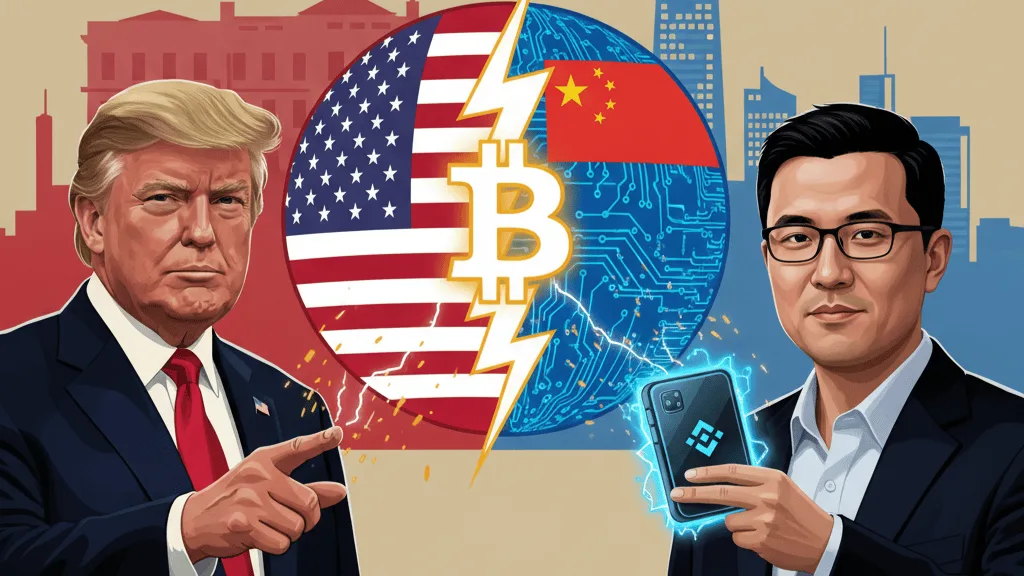
Ripples Across Markets and Diplomacy as Trump pardons Binance founder
The immediate market reaction speaks volumes. Within hours of the announcement:- Bitcoin and BNB (Binance Coin) surged significantly.
After the pardon officially confirmed that Washington’s animosity toward digital assets was over, institutional investors immediately changed their minds.
On a global scale, however, the atmosphere was tense. In a brief statement, the European Union’s Digital Markets Working Group questioned the “moral hazard” of pardoning a convicted executive at a time when regulators were working to hold the cryptocurrency industry accountable. In the meantime, the governments of Singapore and Hong Kong in Asia saw the action as an aggressive attempt to re-assimilate international capital that had been shifting away from American exchanges.
A U-Turn for U.S. Regulation : Trump’s crypto policy
The wider implication is that the US is abandoning its initial crypto policy in favor of industrial revitalization. Crypto is now national infrastructure, whereas under Biden it was viewed as a compliance headache.
Rebuilding supply chains, manufacturing, and energy may be Trump’s prior priorities, but this paradigm shift also applies to digital finance. Crypto is more than just fintech under Trump; it’s a strategic sector that can reclaim American technological leadership.
The pardons indicate a shift toward economic nationalism even within the Republican Party. Lawmakers who support Trump contend that prohibiting or overregulating cryptocurrency would give China’s centrally managed digital currency more economic clout.
The so-called “Crypto Cold War” could therefore define global finance for the next decade—a race not for territory, but for blockchain infrastructure, capital liquidity, and algorithmic influence.
The Future of Global Crypto Governance
The battlefield will be algorithmic, economic, and symbolic if this truly is the beginning of a new Crypto Cold War.
Expect to see:
- A slew of new crypto projects supported by the US that combine public-private partnerships in an effort to regain their position as leaders in innovation.
- Bringing exchanges back to the United States with the help of federal incentives.
- Increased use of digital diplomacy, particularly in countries that are heavily relying on blockchain-driven economies, such as Saudi Arabia and the United Arab Emirates.
This might result in stricter laws for Europe. It poses a threat to Asia’s hegemony in digital currency, particularly China. Additionally, it might signal another bull run for investors, one that is driven by governments placing bets on crypto nationhood rather than speculation.
The Verdict: A Pardon That Changes Everything
Trump’s pardon of Changpeng Zhao appears to be political theater when taken at face value. However, when seen through the lens of global strategy, it signifies a deliberate start over, with digital currency emerging as the new frontline of global dominance.
Crypto is the new oil, the new rail of trade and wealth transfer, and it is no longer the outsider’s market. The next era of geopolitical competition, where blockchain takes the place of bombs as the gauge of national strength, may have been defined by Trump’s gesture, which was far from symbolic.



Leave a Comment