

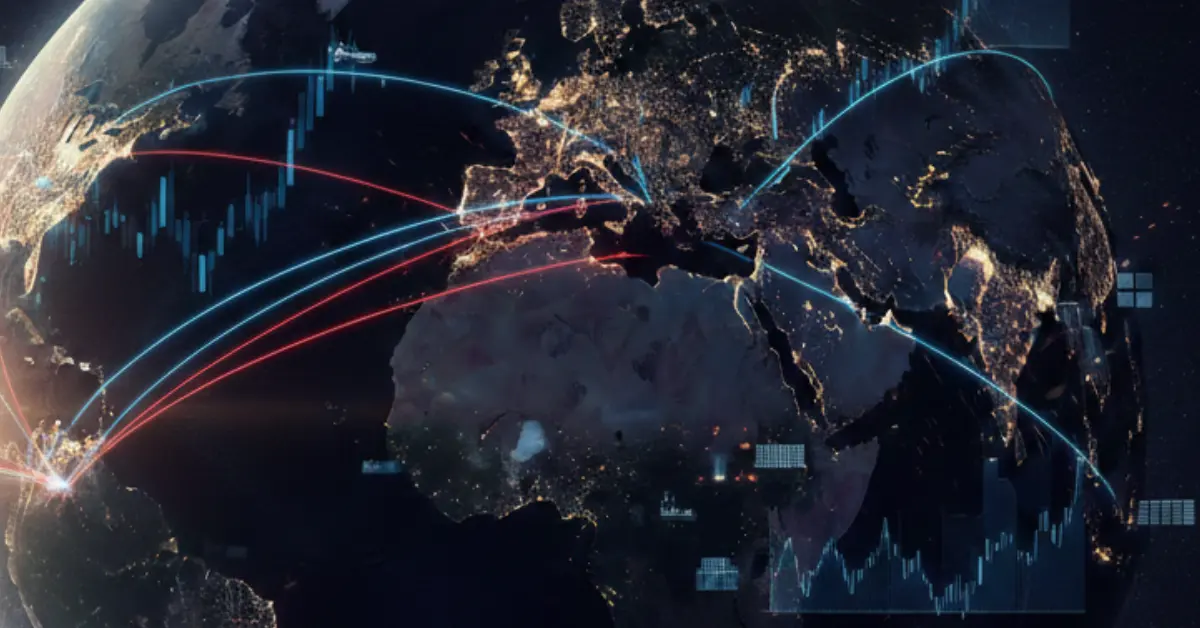
Quick Summary –
The world is not simply “falling apart” — it is reorganizing.
Global trade tensions 2026, rising trade wars, and a new phase of international trade conflict are reshaping the global order.
Economic shocks, inflation cycles, and global supply chain fragmentation have replaced the cheap stability of the 2010s.
Technology — from AI chip export restrictions to digital trade barriers — is accelerating geopolitical competition.
Climate stress, energy trade disruptions, and protectionism trends 2026 are adding new layers of pressure.
The instability we feel is both structural and psychological — amplified by 24/7 media and algorithmic systems.
STORIES YOU MAY LIKEPlugin developed by ProSEOBlogger. Get free gpl themes.


The Feeling We Can’t Shake
There was a time — not long ago — when global crises felt episodic. A financial shock here. A regional conflict there. Markets trembled, then recovered. Governments issued statements. Stability returned.
Today, the tremor feels constant.
From global trade tensions 2026 to inflation spikes, from war headlines to energy trade disruptions, the atmosphere feels charged — restless — as though the world is permanently mid-transition. Conversations in New York, Berlin, Mumbai, and Singapore carry the same undertone: uncertainty.
Search trends ask bluntly: why global trade tensions are rising again in 2026 and will there be another trade war in 2026?
It’s not just about markets. It’s about mood.
We are living through a period where international trade conflict, geopolitical risk perception, and economic instability fears intersect daily with personal life. The alerts never stop. The maps keep shifting. And somewhere between tariffs and technology decoupling, a deeper realization emerges:
The stability we once assumed was permanent may have been temporary.
What Has Actually Changed in 10 Years?
Geopolitical Tensions :
The post–Cold War consensus has fractured. The era of uncontested American dominance is giving way to a multipolar world economy shaped by strategic competition between Washington, Beijing, Brussels, Moscow, and emerging blocs.
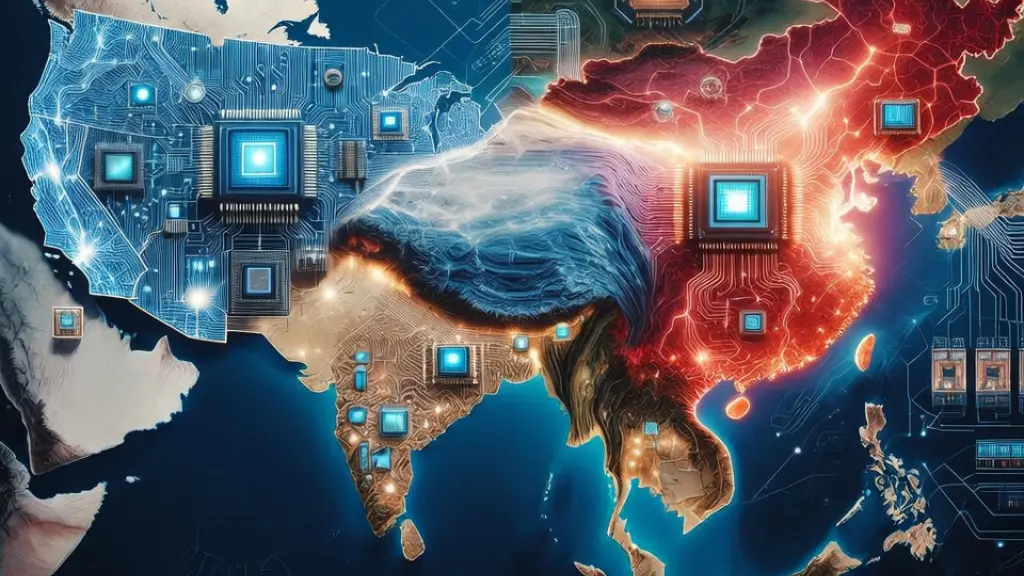
The trade conflict US China 2026 is no longer about soybeans and steel. It’s about semiconductor trade restrictions, AI chip export restrictions, and rare earth export controls. It’s about trade and national security.
Meanwhile:
US EU trade disputes are intensifying over subsidies and industrial policy 2026.
BRICS trade bloc expansion is accelerating.
WTO trade disputes 2026 are rising amid bilateral trade agreements breakdown.
Sanctions and counter sanctions have become normalized tools of economic statecraft.
The result? Trade tensions between major economies are no longer exceptions. They are structural features of the system.
Economic Shocks & Inflation Cycles :
The 2010s were defined by cheap capital and low inflation. The 2020s are defined by volatility.
| Period | Dominant Economic Theme | Market Condition | Policy Environment |
|---|---|---|---|
| 2010–2015 | Post-financial crisis recovery | Low volatility | Ultra-low interest rates |
| 2016–2019 | Globalization peak | Stable growth | Cheap liquidity |
| 2020–2022 | Pandemic shock | Supply chain crisis | Massive stimulus |
| 2023–2026 | Inflation and trade tensions | Market volatility concerns | Higher rates, protectionism |
Inflation and trade tensions now interact directly. Analysts debate how tariffs impact inflation in 2026, as cross-border trade restrictions push up global commodity prices volatility.
Shipping and logistics crisis episodes expose the fragility of hyper-efficient supply chains. Global recession risk 2026 is discussed seriously in financial centers.
Global economic tensions are not cyclical anymore — they are systemic.
Technological Acceleration :
If geopolitics sets the stage, technology accelerates the drama.
AI, automation, and digital trade barriers are transforming economic power. Semiconductor trade war narratives dominate headlines. Countries are investing billions in supply chain reshoring and friendshoring strategy initiatives.
Technology decoupling between major economies is real — not rhetorical.
The causes of global trade tensions increasingly revolve around advanced technology: quantum computing, AI models, chip fabrication, rare earth supply chains. Industrial policy 2026 is no longer abstract; it is central to national survival strategies.
Climate & Environmental Pressure :
Extreme weather events, energy transition friction, and oil trade sanctions are reshaping trade routes.
Energy trade disruptions — whether due to war, sanctions, or climate policies — now affect currency wars 2026 debates and dollar dominance trade conflict scenarios.
Export dependent economies risk sharp volatility when commodity flows are interrupted. Emerging markets trade risk is rising as climate vulnerability intersects with global economic fragmentation.
The planet itself has become a geopolitical variable.
The Psychology of Instability: Why It Feels Worse
24/7 News & Doomscrolling
In 2015, a crisis felt like a headline. In 2026, it feels like a live stream.
The availability bias ensures that constant exposure to international trade conflict, tariffs and trade barriers 2026, and sanctions reinforces global uncertainty 2026.
Our perception of risk expands with every notification.
Algorithmic Amplification
Algorithms prioritize emotional intensity. Market volatility concerns trend faster than stability. Protectionism trends 2026 spark more engagement than free trade optimism.
Digital systems magnify geopolitical risk perception — not necessarily because the world is objectively more dangerous, but because negative signals spread faster than reassuring ones.
Social Fragmentation
Political polarization intensifies economic nationalism. Regional trade blocs competition replaces global cooperation narratives.
Public trust in institutions — from the WTO to national governments — has weakened. Investor sentiment 2026 reflects that erosion.
The fragmentation is social, informational, and economic — all at once.
The Structural Shift: End of the “Cheap Stability” Era
Between 1990 and roughly 2015, the world benefited from what could be called “cheap stability”:
Cheap energy
Cheap capital
Expanding globalization
Relative geopolitical calm
Today, that equation has inverted.
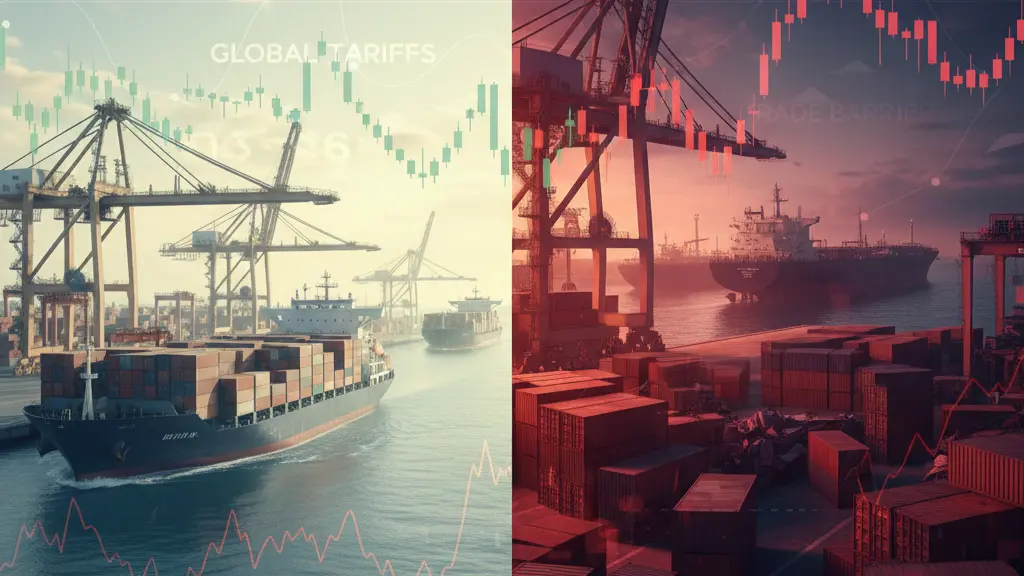
Global supply chain fragmentation is replacing seamless integration. Deglobalization trends 2026 are evident in friendshoring strategy and cross-border trade restrictions. Strategic trade policies now prioritize resilience over efficiency.
The cost of security has replaced the logic of efficiency.
The Three Major Forces Driving Today’s Instability
Power Transition (US dominance → multipolar world)
Power transitions are historically volatile. As US China trade relations 2026 evolve into deeper strategic rivalry, tariff escalation cycle patterns reappear.
What caused the new US China trade conflict?
It is not simply tariffs. It is long-term strategic competition over technology, finance, and global influence.
Multipolarity means more negotiation — and more friction.
Economic Rebalancing (cheap money → expensive capital)
Central banks worldwide have shifted from stimulus to tightening. Capital is no longer abundant.
How trade tensions affect global markets becomes more pronounced when borrowing costs are higher. Stock market impact of trade wars now ripples faster across asset classes.
Safe haven assets 2026 — gold, sovereign bonds, select currencies — gain attention as volatility rises.
Technological Disruption (AI + automation + digital propaganda)
AI chip export restrictions symbolize a new era where technology and geopolitics are inseparable.
Digital trade barriers and cyber-competition blur the line between economic policy and national defense. Multinational supply chain risk now includes cyber vulnerabilities.
Technology accelerates both growth and instability.
Is the World Actually More Dangerous?
Statistically, global war deaths remain lower than in the mid-20th century. Yet geopolitical tension feels higher than in the 2010s.
The difference lies in interconnectedness.
Global trade disruption in one region cascades into currency wars 2026 debates elsewhere. Sanctions ripple through financial systems instantly.
The system is more tightly coupled — meaning shocks spread faster.
Danger may not be absolute. But fragility is greater.
What This Means for Individuals, Businesses & Investors
For individuals, adaptability is currency. Skill diversification and digital literacy mitigate uncertainty.
For businesses, multinational supply chain risk must be reassessed. Friendshoring strategy and supply chain reshoring are not trends — they are strategic imperatives.
For investors, global trade risk investment strategy matters deeply. How trade tensions affect investors depends on asset allocation, geographic exposure, and sector positioning.
Export dependent economies risk underperformance during tariff escalation cycles. Energy trade disruptions influence commodity markets. Inflation and trade tensions shape monetary policy responses.
Market volatility concerns are rational — but volatility also creates opportunity.
The Big Question: Are We in a Permanent Transition?
History suggests transitions feel chaotic while they unfold.
Post–World War II reconstruction. The end of the Cold War. The financial crisis of 2008.
Each period felt destabilizing — until a new equilibrium emerged.
Is deglobalization accelerating in 2026?
Evidence suggests partial fragmentation rather than total retreat. Global economic fragmentation is real, but trade volumes remain substantial.
The world is not deconstructing. It is reorganizing around security, resilience, and strategic autonomy.
The Conclusion: Stability Is Changing Form
The 2010s promised seamless globalization. The mid-2020s deliver strategic recalibration.
Global trade tensions 2026, rising trade wars 2026, and protectionism trends 2026 are symptoms of deeper structural shifts — power transition, economic rebalancing, and technological acceleration.
The world feels more unstable because it is less centralized, less predictable, and more contested.
But instability is not collapse. It is transformation.
And transformation, however unsettling, is the engine of historical renewal.
FAQs
1. Why are trade tensions rising again in 2026?
Rising strategic competition between major economies, technology decoupling, protectionism trends 2026, and security-driven industrial policy are key drivers.
2. Will there be another trade war in 2026?
While a full-scale global trade war is uncertain, localized tariff escalation cycles and trade retaliation measures are already visible.
3. How do trade tensions affect global markets?
They influence inflation, currency movements, stock market volatility, and capital flows, especially in export dependent economies.
4. Is deglobalization accelerating in 2026?
Partial deglobalization trends 2026 are evident through supply chain reshoring and friendshoring strategy, but global trade remains significant.
5. How should investors respond to global trade disruption?
A diversified global trade risk investment strategy, awareness of emerging markets trade risk, and focus on resilient sectors are key considerations.



Leave a Comment