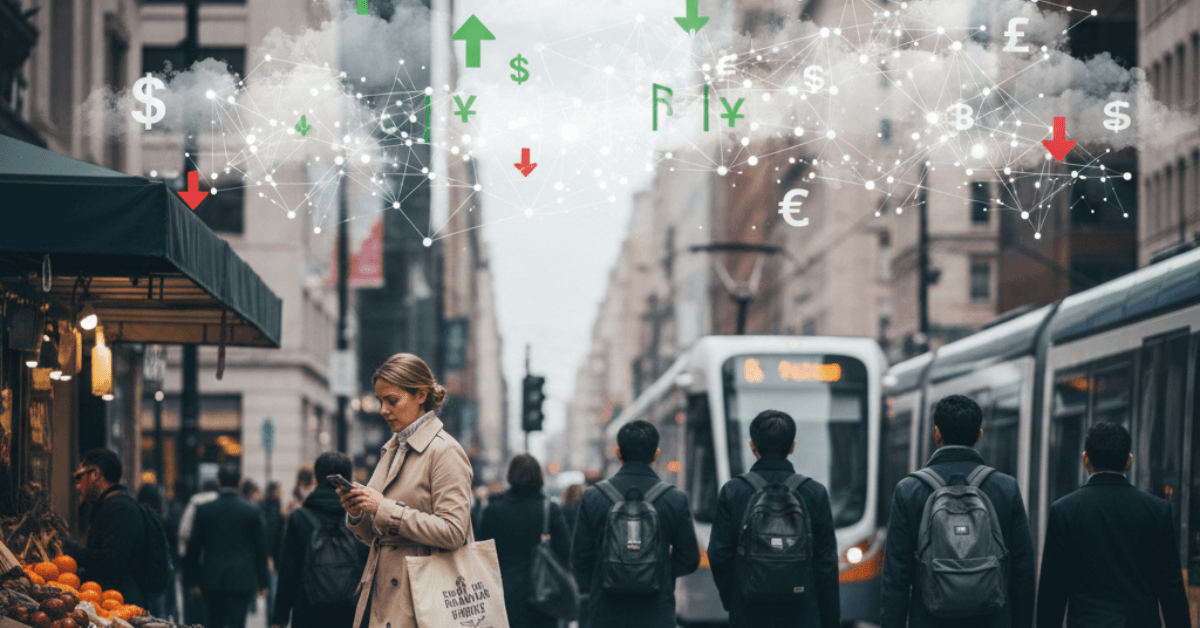
Summary Box: The Quiet Forces Shaping Your Day
-
Central banks and everyday life are inseparable in the 2020s—rates, prices, jobs, and rents are policy outcomes, not accidents.
-
Central bank decisions explained plainly show how money’s price shapes kitchens, commutes, and careers.
-
From interest rates and cost of living to currencies and crises, this is how power reaches you—softly, steadily, and everywhere.
The Invisible Hand in Your Wallet
The alarm rings. You check your phone. A notification from your bank arrives before the weather. Your savings earned a little more interest this month—or maybe your EMI quietly ticked higher. By breakfast, the price of milk feels heavier than yesterday. None of this feels political. All of it is.
This is how central banks affect people now: not with speeches, but with sensations. A fraction of a percentage point, decided in a meeting room thousands of miles away, tilts the day. In the 2020s, the impact of central banks on the economy shows up first in your wallet—and lingers there.
What Is a Central Bank—Without the Jargon
Strip away the jargon and a central bank is the institution that decides how expensive money should be, and how much of it flows through the system. That’s it. The rest is craft.
In the 2020s, this expanded role has quietly reshaped geopolitics as well—an evolution explored further in The New Global Power Map Taking Shape This Decade.
Institutions like the Federal Reserve, the European Central Bank, and the Reserve Bank of India don’t sell goods or set taxes. They tune conditions—credit, liquidity, confidence—so economies don’t overheat or freeze. The central bank role in the economy has grown because volatility has grown. And why central banks matter is simple: without them, money becomes a rumor.

Interest Rates: The Domino That Hits First
Interest rates are the first domino because they reprice time itself. When rates rise, tomorrow becomes more expensive than today. When they fall, tomorrow gets cheaper—and riskier.
Here’s how interest rates affect loans in real life: borrowing costs explained aren’t theoretical; they are monthly. The interest rate impact on home loans stretches tenures, changes neighborhoods, postpones weddings. Central bank rate hikes explained as inflation control still feel like friction at checkout.
Rates touch everything:
Savings account interest rates impact whether patience pays.
EMIs and central bank policy decide what fits in a budget.
The interest rates and cost of living dance is relentless.
Inflation Isn’t Abstract—It’s Your Grocery Bill
Inflation doesn’t arrive as a chart. It arrives as a choice: chicken or fish, brand or store-label, taxi or bus. The inflation impact on households is emotional before it’s numeric.
People ask why prices keep rising because the answer matters to dignity. Food prices and inflation squeeze first; inflation and everyday expenses linger longest. Central banks tighten to show how central banks control inflation, but that cure stings. The cost of living crisis explained is policy lag meeting patience limits. And purchasing power and inflation is the quiet arithmetic that keeps score.
Jobs, Salaries, and the Myth of Stability
For a generation, stability felt normal. It wasn’t. It was a phase.
How monetary policy affects jobs is the tightrope of our time. Cool inflation too fast and hiring slows; protect jobs too much and prices flare. Central banks and unemployment move together, not always kindly. The job market impact of interest rates shows up as cautious recruiters and frozen offers. Wage growth and inflation chase each other; economic slowdown effects on workers arrive with little warning. Recession and employment is a phrase that feels distant—until it isn’t.
Housing, Rent, and the Cost of Shelter
Housing is where policy turns personal. Housing market and interest rates decide who buys, who waits, who rents forever. Mortgage rates explained are the difference between “approved” and “maybe next year.”
Why rents are increasing is a story of scarce supply meeting expensive credit. The real estate impact of central banks shows up as stalled projects and soaring leases. Buying a house during high interest rates feels like swimming upstream. The renters vs homeowners economy hardens lines: assets cushion some; volatility hits others.
Currency Power: Why Your Money Travels Differently
Currencies are confidence, priced daily. Currency value and central banks tell you how trusted a country’s policy is—by how far its money goes.
If you’ve wondered about exchange rates explained simply, here’s the translation: policy credibility attracts capital; doubt repels it. Why currency value changes is often policy signaling, not drama. A weaker currency means imported goods price increase and higher travel costs and exchange rates. In a connected world, the global economy and central banks share a single pulse.
Inside the everyday ledger:
| Policy Signal | Market Reaction | Daily-Life Effect |
|---|---|---|
| Credible tightening | Currency firms | Imports steadier |
| Loose policy | Currency softens | Travel costs rise |
| Uncertainty | Volatility spikes | Prices jitter |
Markets React First—People React Later
Markets are anticipatory; households are experiential. Bonds and stocks move on hints. People move on paydays.
This timing gap explains frustration. Financial prices adjust instantly; rents, wages, and jobs follow months later. It’s why how central banks affect people can feel opaque even when effects are loud. Policy travels fast; life catches up slowly.
Crisis Mode: When Central Banks Go Off-Script
Crises break rules—and write new ones. During shocks, central banks during economic crisis expand toolkits. Money printing explained became a household phrase. The quantitative easing impact lifted asset prices, stabilized credit, and widened debates.
Analysis from the International Monetary Fund shows that emergency stimulus during the pandemic prevented systemic collapse, while also increasing long-term inflationary pressures. The pandemic stimulus effects prevented collapse and planted inflation seeds. Every financial crisis central bank response is a trade: speed for side effects. These economic stability tools buy time. They don’t erase consequences.
Are Central Banks Too Powerful—or Not Powerful Enough?
This is the question behind the question. Are central banks too powerful, or simply too visible now that outcomes are felt daily?
Nowadays everywhere in the world trade tensions are on rise. The central bank independence debate isn’t academic anymore. People ask who controls monetary policy when it shapes rent and groceries. Tension between central banks vs governments is structural: fiscal promises meet monetary limits. Transparency in monetary policy has become a trust technology. Without it, public trust in central banks erodes—quietly, dangerously.
The Future: Central Banking in an Age of AI & Uncertainty
The future of central banking will be faster, more data-driven, and more contested. AI and monetary policy promise better forecasts and quicker reactions—also harder accountability.
Digital currency central banks are testing what money means when it’s programmable. The central bank digital currency impact could reshape payments, privacy, and inclusion. Add climate risk, demographics, and geopolitics, and modern monetary policy challenges multiply. Next economic cycle predictions point to volatility, not collapse—and to institutions judged by communication as much as outcomes.
Final Takeaway: Reading the Signs Before They Hit You
So, how does central bank policy affect my daily life? In your EMI, your rent, your grocery bill, your job options. Why do central bank decisions matter to me? Because they decide the price of time, risk, and patience.
Learn the signals. Read the statements. Watch the rates. The invisible hand isn’t mysterious anymore—it’s measurable. And when you understand it, everyday life stops feeling random.
Frequently Asked Questions
1) How interest rates affect common people the most?
Through loan EMIs, rent pressure, hiring slowdowns, and savings returns.
2) Why groceries are expensive even when growth looks fine?
Because food prices and inflation respond to supply shocks and delayed policy effects.
3) How central banks control the economy without laws?
By steering credit, liquidity, and expectations—powerful levers that move behavior.
4) Can central banks prevent recessions entirely?
No. They can cushion cycles, not cancel them.
5) Will digital currencies replace cash soon?
Unlikely near-term; more likely they’ll coexist, changing payments and oversight.
Money doesn’t shout anymore. It whispers. Central banks decide the volume—and everyday life hears the echo.


Leave a Comment