Why Markets Fear First and Think Later

Follow

Published on: 25-01-2026
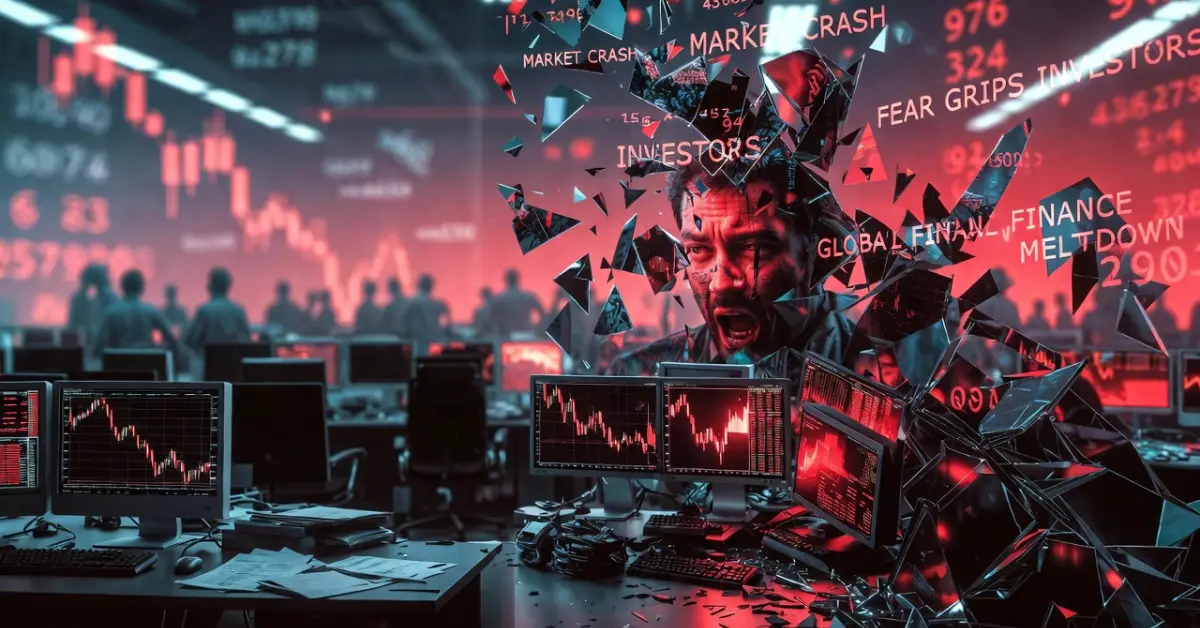
Illustration showing fear-driven stock market volatility with falling charts, emotional investors, and dramatic financial headlines overpowering market facts.

📊 QUICK TAKE :

What’s happening: Financial markets consistently overreact to negative news while ignoring positive fundamentals, driven by deep psychological biases rather than economic reality.

Why it matters: Understanding market psychology—specifically loss aversion and herd behavior—is critical for investors navigating volatility-driven environments where sentiment trumps data.

The bottom line: Fear spreads faster than facts in markets because emotional responses are hardwired deeper than rational analysis, creating cycles of panic selling followed by eventual correction to fundamentals.

Key insight: Behavioral finance research shows investors feel losses twice as intensely as equivalent gains, explaining why markets crash suddenly but recover slowly.

The trading floor went silent. It was March 2020, and screens across Wall Street bled red as the Dow Jones plummeted nearly 3,000 points in a single session. Analysts scrambled for explanations, but the truth was simpler and more unsettling than any spreadsheet could reveal: markets weren’t reacting to what was happening—they were reacting to what might happen. Fear had taken the wheel, and facts were merely passengers screaming from the backseat.


This wasn’t an anomaly. It was a pattern as old as markets themselves.
The Ancient Brain in a Modern Market

Walk into any trading room today and you’ll find cutting-edge algorithms, real-time data feeds, and analysts armed with PhDs in quantitative finance. Yet beneath this veneer of rationality lies something far more primal: the human brain, still operating on evolutionary software designed for survival on the African savanna, not navigating the complexities of global equity markets.

When our ancestors heard rustling in the grass, those who assumed it was a predator and ran survived more often than those who paused to gather facts. This neural wiring—what psychologists call loss aversion—remains embedded in our decision-making architecture. In financial terms, it means investors experience the pain of a $1,000 loss roughly twice as intensely as the pleasure of a $1,000 gain.

Daniel Kahneman and Amos Tversky formalized this insight through prospect theory in the 1970s, fundamentally challenging the assumption that markets operate rationally. Their research revealed that emotional investing isn’t a flaw in the system—it is the system. When uncertainty strikes, the amygdala fires faster than the prefrontal cortex can calculate probabilities, triggering fear-based decision making in markets before spreadsheets finish loading.

The Opening Bell: When Fear Enters the Room

The market doesn’t whisper when it’s afraid.
It shouts.

A single headline flashes red across trading screens. Phones vibrate. Charts plunge. In Mumbai, New York, London—time zones blur as the same emotion ripples through portfolios worldwide. Earnings haven’t changed. Economic data hasn’t collapsed. Yet prices fall anyway.

This is the eternal paradox of finance: markets react to fear, not facts—at least at first.

To understand why markets react more to fear than facts, you have to step away from balance sheets and into the human mind. Markets are not cold machines. They are emotional ecosystems, powered by psychology, amplified by media, and accelerated by technology.

The Illusion of Rational Markets

For decades, classical economics insisted on a comforting myth: investors are rational actors, calmly processing information and pricing assets accordingly.

Reality disagreed.

Repeatedly.

From sudden sell-offs to euphoric bubbles, irrational market behavior has become the norm, not the exception. Market psychology explained in its simplest form looks like this:

Facts inform value.
Fear dictates timing.

In moments of uncertainty, fear-based decision making in markets overrides logic. The brain does not ask, “Is this asset fairly valued?”
It asks, “What if I’m wrong—and everyone else knows it?”

The Brain on Risk: Why Fear Moves Faster Than Thought

Market Psychology: How Fear Drives Investor Decisions
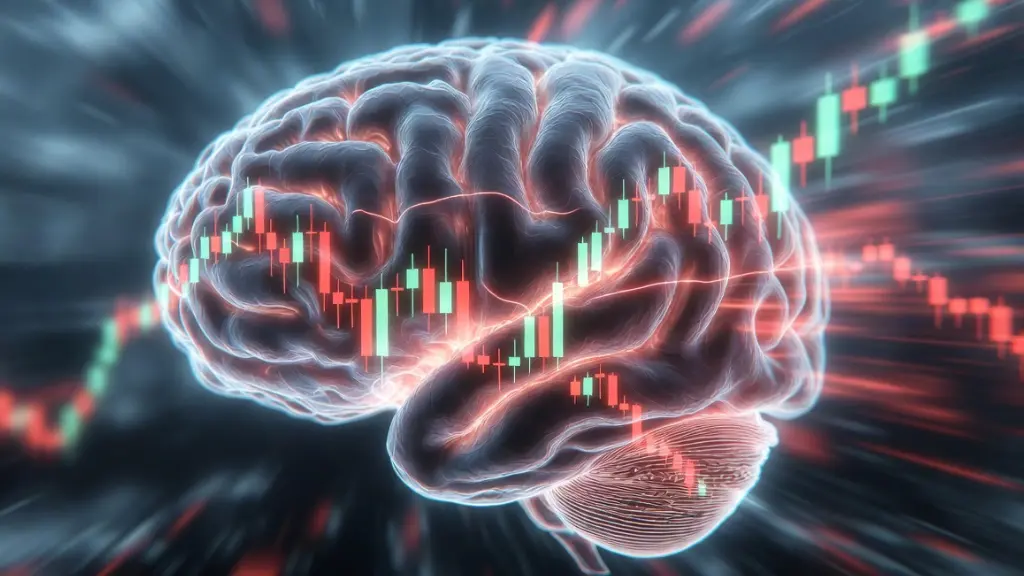
Fear reaches the brain before reason—explaining why markets often move on instinct before facts.

Neuroscience offers an uncomfortable truth: fear has a speed advantage.

The amygdala—our threat detection center—reacts milliseconds before the rational prefrontal cortex engages. In market terms, that means panic selling psychology kicks in long before analysis can intervene.

This biological wiring explains:

  • Why markets react to uncertainty faster than to clarity

  • Why volatility spikes before data is digested

  • Why emotional investing dominates during crises

Fear evolved to keep us alive. In markets, it often does the opposite.

Loss Hurts More Than Gain Heals

One cornerstone of behavioral finance theory is loss aversion in investing. Simply put: losses feel roughly twice as painful as equivalent gains feel pleasurable.

This imbalance fuels fear-driven markets.
 Loss Aversion in Action –

ScenarioEmotional ResponseMarket Impact
Portfolio down 10%Panic, urgencySelling accelerates
Portfolio up 10%Relief, cautionGains locked in early
Bad news (uncertain)Fear dominatesVolatility spikes
Good news (certain)Skepticism lingersSlow reaction

This asymmetry explains why markets fall on bad news but ignore good news—and why short-term market overreaction is so common.

Herds Over Heroes: The Social Side of Panic

Fear rarely acts alone. It travels in packs.

Herd behavior in stock markets turns individual anxiety into collective movement. Investors don’t just react to news—they react to each other reacting.

This is where investor sentiment analysis becomes more predictive than spreadsheets. When everyone is watching everyone else, prices stop reflecting value and start reflecting emotion.

The result?

  • Fear-driven sell-offs

  • Cascading stop-loss triggers

  • Volatility driven by sentiment, not fundamentals

Markets don’t collapse because everyone is wrong.
They collapse because everyone is scared at the same time.

Headlines That Shake Trillions

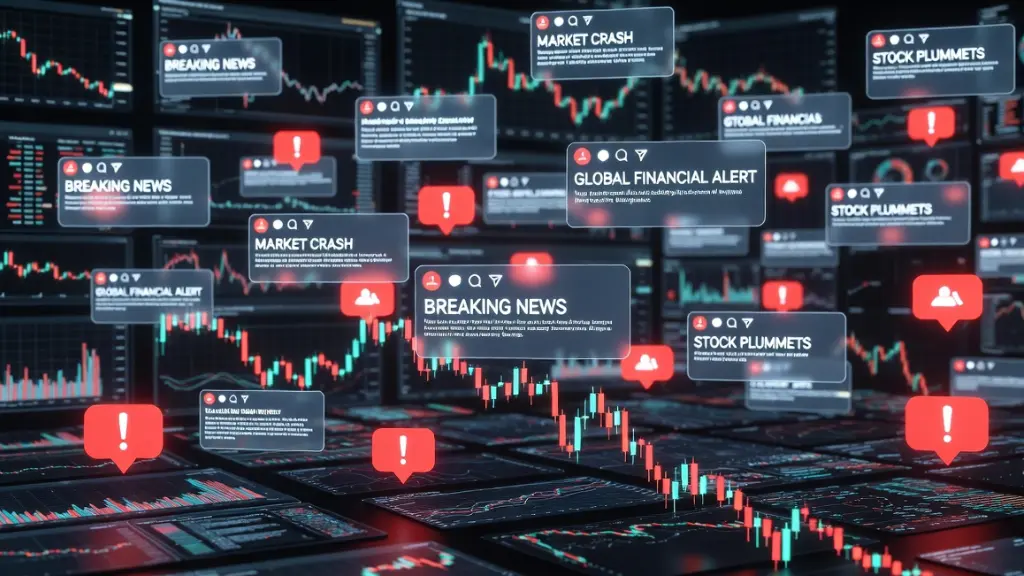
Illustration showing media-driven market panic with digital headlines, social media signals, and fear-driven stock market volatility.
In modern markets, fear spreads through headlines and algorithms faster than facts can respond.

Modern markets don’t just fear reality—they fear narratives.

The media influence on stock markets has intensified as:

  • Breaking news rewards speed over nuance

  • Algorithms amplify emotional content

  • Social platforms accelerate panic cycles

A calm economic report rarely goes viral. A frightening headline does.

This creates fear amplification in financial media, where news-driven market reactions move faster than corrections. In this environment, sentiment-driven trading often outpaces fundamental analysis—especially during geopolitical or macroeconomic uncertainty.

The Media's Megaphone Effect

Turn on financial news during a market downdraft and you’ll notice something peculiar: the emotional temperature always runs several degrees hotter than the actual economic situation warrants. This isn’t journalistic malpractice—it’s the inevitable result of media influence on stock markets competing for attention in an oversaturated information environment.

Headlines don’t say “Markets Down Modestly on Mixed Data.” They scream “Market Bloodbath” or “Investors Flee Amid Growing Fears.” These aren’t lies, exactly, but they’re narrative choices that amplify sentiment rather than clarify reality. The fear amplification in financial media creates what researchers call availability cascade—when repeated exposure to alarming scenarios makes them feel more probable than they actually are.

Social media accelerates this dynamic exponentially. A concerning rumor posted on Twitter can reach millions of investors before any fact-checking occurs. The psychological impact of social media and market panic manifests in real-time price movements, as traders react to trending topics rather than earnings reports. The wisdom of crowds becomes the hysteria of crowds, distinguishing between signal and noise becomes nearly impossible.

During the Silicon Valley Bank collapse in March 2023, depositors withdrew billions based partly on genuine concern about bank solvency and partly on Twitter threads suggesting imminent failure. The panic became the problem, turning a manageable situation into a crisis requiring federal intervention. Fear, amplified through digital networks, had created the very outcome it anticipated.

Why Facts Arrive Late to the Party

Here’s the subtle but crucial distinction:
Facts do matter—but they move slowly.

Fundamentals vs sentiment defines the market’s two clocks:

  • Short term: Emotion dominates

  • Long term: Data reasserts control

This explains:

  • Why good data doesn’t calm markets immediately

  • Why markets appear to ignore earnings

  • Why recoveries often begin while headlines are still bleak

Eventually, fundamentals matter. Earnings catch up. Balance sheets speak. But by then, fear has already written the first draft of the price.

The Emotional Cycles of Financial Markets

Markets move in emotional seasons:

  1. Confidence

  2. Complacency

  3. Anxiety

  4. Panic

  5. Capitulation

  6. Recovery

These stock market fear cycles repeat not because investors forget facts—but because fear feels new every time.

Understanding how fear affects investment decisions is less about prediction and more about recognition.

The Path Through the Panic

So what’s an investor to do in a world where uncertainty scares markets more than reality and fear spreads faster than facts in markets? The answer isn’t to fight human nature—it’s to understand and account for it.

First, recognize that managing emotions in investing begins with accepting their inevitability. You will feel fear during market crashes. Your portfolio will decline. The temptation to sell will feel overwhelming. This is normal, universal, and doesn’t indicate poor judgment—it indicates you’re human. The question isn’t whether you’ll experience these emotions but how you’ll respond to them.

Second, develop what Warren Buffett calls a “temperamental advantage”—not necessarily superior analysis, but superior emotional discipline. This means creating investment rules during calm periods that you commit to following during volatile ones. Dollar-cost averaging, rebalancing schedules, diversification strategies—these aren’t just technical tools, they’re emotional safeguards that provide structure when fear tempts you to abandon your plan.

Third, cultivate historical perspective. The market psychology explained through behavioral finance isn’t describing new phenomena—it’s formalizing patterns visible across centuries of financial history. Every generation experiences market crashes that feel unprecedented. Every generation discovers that, eventually, markets recover. Understanding this doesn’t eliminate fear, but it provides context that can prevent fear from dictating your decisions.

Finally, embrace the paradox that how to invest during market fear often means doing exactly what feels most uncomfortable: buying quality assets when everyone else is selling, maintaining positions when headlines scream danger, trusting long-term fundamentals when short-term sentiment turns apocalyptic. This isn’t recklessness—it’s recognizing that fear-based decision making in markets creates mispricings that favor those willing to lean against the panic.

The Eternal Return

Markets will always react more to fear than facts because we will always be human, and being human means experiencing emotions that bypass rational analysis. The question isn’t whether fear-driven markets will continue—they will. The question is whether individual investors can develop the self-awareness and discipline to avoid becoming casualties of their own evolutionary wiring.

The next crash is coming. So is the next recovery. The next wave of panic selling will feel just as justified as every previous one, and the eventual return to fundamentals will seem just as surprising. This cycle isn’t a flaw in financial markets—it’s the fundamental rhythm of systems governed by human psychology operating at scale.

Understanding why investor fear and market behavior diverge from economic reality doesn’t make the emotional experience easier. But it does provide a framework for navigating volatility without sacrificing long-term financial goals to short-term emotional impulses. And in a world where fear will always spread faster than facts, that understanding might be the most valuable edge any investor can develop.

The trading floor is quiet again. Screens show green today, though who knows what tomorrow brings. Somewhere, an analyst is crafting a narrative to explain today’s movement, and that narrative will feel just as compelling as yesterday’s panic, just as persuasive as tomorrow’s euphoria. The stories change, but the psychology remains constant—and that’s actually comforting, once you stop fighting it and start working with it.

Because markets don’t just reflect reality. They reflect us—our hopes, our fears, our irrationality, our eventual return to reason. Understanding that won’t make you immune to fear. But it might just keep fear from making your decisions for you.

❓ Frequently Asked Questions

Why do markets panic even when fundamentals are strong?

Because investor fear and market behavior are driven by uncertainty, not spreadsheets. Fear responds to the unknown faster than fundamentals respond to clarity.

How does media amplify market fear?

Through emotionally charged headlines, algorithmic prioritization, and real-time social sharing—creating fear-driven markets detached from data.

Do facts eventually correct fear-driven markets?

Yes. Over time, earnings, growth, and balance sheets restore equilibrium—but only after emotional volatility runs its course.

How can investors manage emotions during market volatility?

By focusing on process, not prediction. Discipline beats emotion in the long run.

Is emotional investing always bad?

Emotion is human. The danger lies in letting short-term fear override long-term strategy.

Final thought:
Markets don’t crash because the world ends.
They crash because fear convinces us it already has

Neel Murphy

Neel covers the shifting currents of business, finance, and global economics with a steady, analytical voice. His work examines how policy, markets, and enterprise intersect to shape the modern world. Drawing on a broad understanding of economic trends, Neel brings measured insight and clarity to the forces driving growth, risk, and change.

Disclaimer:

Disclosure: This article is for general information only and is based on publicly available sources. We aim for accuracy but can’t guarantee it. The views expressed are the author’s and may not reflect those of the publication. Some content was created with help from AI and reviewed by a human for clarity and accuracy. We value transparency and encourage readers to verify important details. This article may include affiliate links. If you buy something through them, we may earn a small commission — at no extra cost to you. All information is carefully selected and reviewed to ensure it’s helpful and trustworthy.

Leave a Comment

The World’s Heartbeat, Billions Pulse exists to capture those beats — the rhythm of our shared human story.

Follow Us On Social Media

Get Latest Update On Social Media