Summary Box — Read This First
- Big idea: The global power map is being redrawn—not by conquest alone, but by technology, trade leverage, demographics, and narrative control.
- What’s changing: A new world order is emerging as the decline of unipolarity gives way to a multipolar world order marked by power asymmetry and influence without dominance.
- Why now: The global power shift 2020s is accelerating amid supply-chain shocks, AI diffusion, sanctions, and climate stress.
What to watch: Technology as geopolitical power, economic deterrence, middle powers geopolitics, and the Global South influence that will tilt outcomes by 2030.
A World Quietly Rearranged
On a humid evening in Singapore, container ships idle at anchor while algorithms decide their next port. In Brussels, regulators debate data sovereignty with the intensity once reserved for borders. In Bengaluru, code becomes currency. This is the changing geopolitical landscape of our age—less about flags raised, more about systems bent.
The old atlas, with its neat hierarchies, can’t explain today’s international power dynamics. The world power balance is shifting—fast, unevenly, and in layers. Power is no longer a single summit to climb; it’s a network to navigate. Welcome to the geopolitical transformation of the decade.
Why the Old Map Failed
For three decades after the Cold War, a unipolar assumption shaped policy and markets. That assumption is gone. What replaced it isn’t chaos; it’s power redistribution. Military might still matters, but systemic power—the ability to shape standards, flows, and expectations—matters more.
This global dominance transition looks like geopolitical fragmentation on the surface. Underneath, it’s a recalibration: states trading absolute control for strategic influence; alliances loosening into option-rich partnerships.
The Shape of Multipolarity
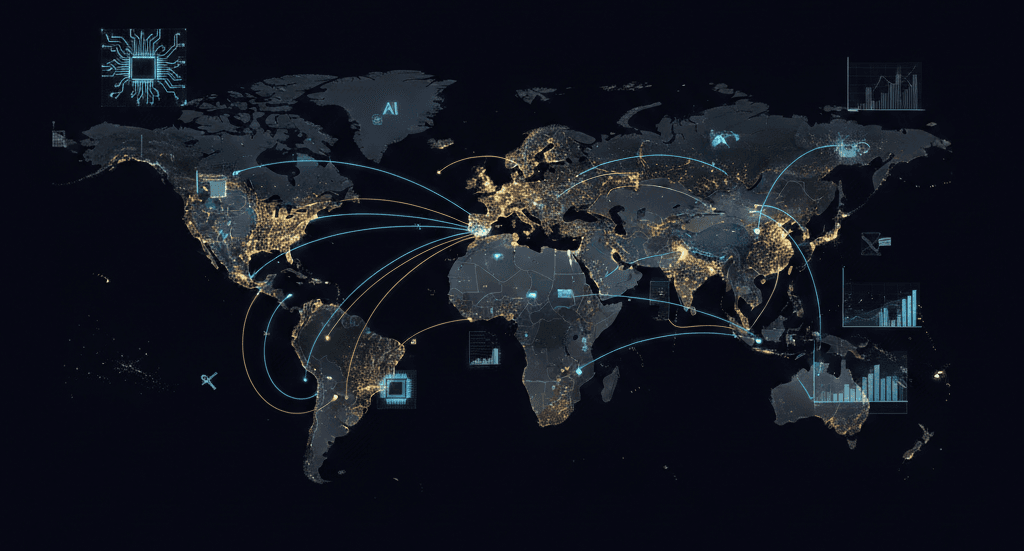
Is the world becoming multipolar? Yes—but unevenly. The rise of multipolarity doesn’t crown equal poles; it creates overlapping spheres. Influence clusters around technologies, currencies, energy routes, and platforms. The result is a global influence map where leverage is situational and time-bound.
The Major Power Centers (and How They’re Changing)
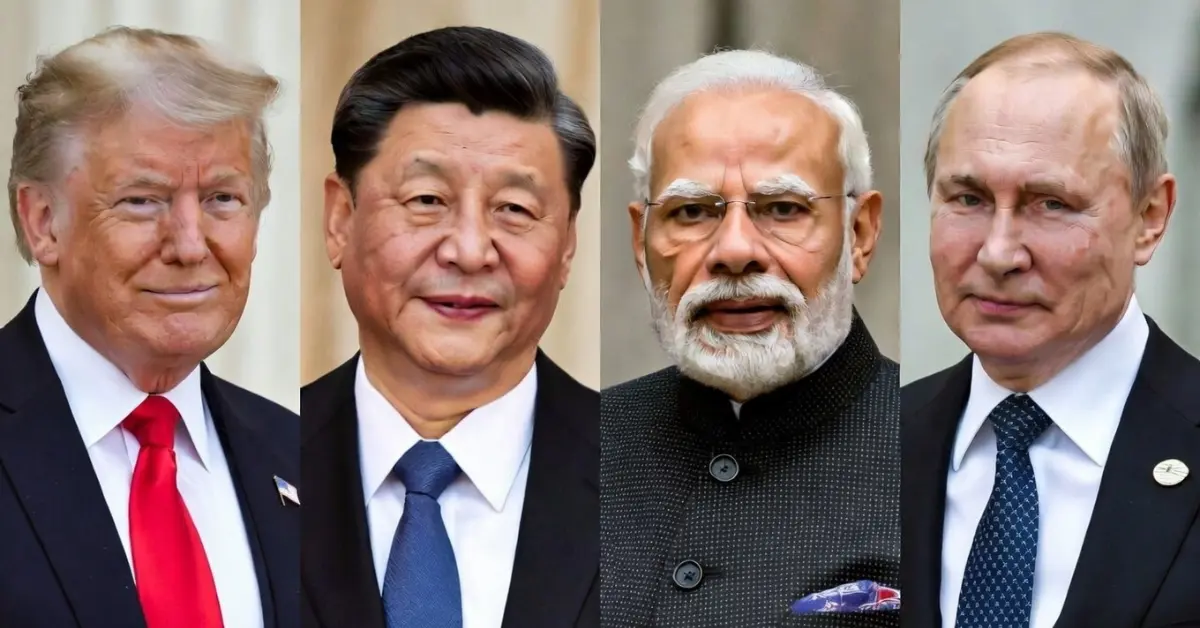
- United States remains central through finance, defense, and culture—yet increasingly acts as a rules architect rather than a lone enforcer. United States global influence endures via standards and alliances, even as internal polarization constrains bandwidth.
- China wields scale and manufacturing gravity. China global strategy blends infrastructure, technology, and market access—powerful, but limited by trust deficits and trade frictions.
- India is the decade’s swing story. As an India emerging power, it converts demographics and digital capacity into optionality—non-alignment updated for the platform age.
- European Union excels as a regulatory superpower. The European Union global role shapes markets through compliance, climate rules, and data law—quiet power, real consequences.
- Russia leans on Russia geopolitical leverage—energy, disruption, and risk tolerance—to compensate for economic constraints.
Together, they illustrate influence without dominance: none can fully command; all can meaningfully shape.
Economics Replaces War—Mostly
The front lines moved. Economic power shift defines this decade as states weaponize interdependence. Global trade realignment is no longer theoretical; it’s policy.
Supply chain geopolitics decide who manufactures tomorrow’s chips. Energy geopolitics decides who keeps the lights on during winters of discontent. Sanctions as power tools—once rare—are now routine. Even currency dominance is contested as de-dollarization trends nibble at the edges of finance.
Deterrence today is often economic: deny access, raise costs, slow rivals—without firing a shot.
Technology Is the New Territory
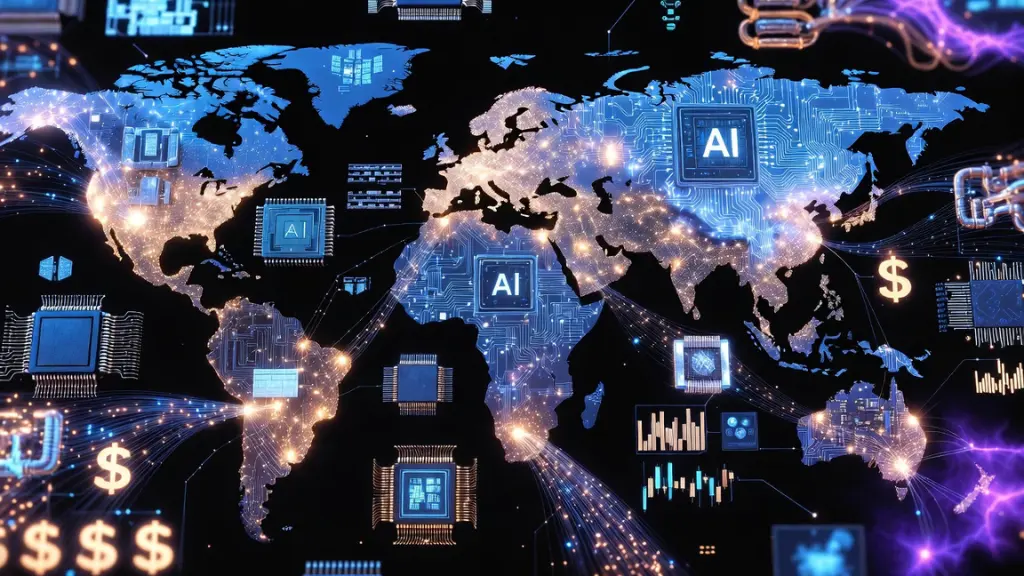
The most decisive terrain is invisible. Technology as geopolitical power reshapes everything from growth to security.
- AI and global power: compute access, talent, and data pipelines decide productivity and persuasion.
- Semiconductor geopolitics: fabs and chokepoints define industrial futures.
- Digital sovereignty: who owns data, clouds, and standards.
- Cyber power nations and space geopolitics: deterrence without borders.
- Platform power and data dominance: influence at scale.
A widening tech cold war—not ideological, but infrastructural—rewards innovation-driven power.
Security Without Invasion
The global security landscape favors ambiguity. Modern warfare evolution blends cyber, economic pressure, and narrative shaping. The debate is no longer military vs economic power; it’s how they fuse.
Hybrid warfare, gray zone conflicts, influence operations, and calibrated power projection raise geopolitical risk while avoiding escalation. This is conflict without war—messy, persistent, and deniable.
The Rise of the Middle—and the South
If you’re still watching only superpowers, you’re late. Middle powers geopolitics now swing outcomes by controlling strategic trade routes, standards bodies, and logistics hubs. Meanwhile, Global South influence grows as populations, resources, and markets expand.
These regional power centers practice pragmatic alignment. They are non-aligned powers by choice, not indecision—maximizing leverage in a crowded field. The emerging economies power shift is the decade’s quiet engine.
A Snapshot of Power Vectors (2025 → 2030)
Power Vector | What Decides It | Who Gains |
Technology | Compute, chips, data | Platform leaders, chip hubs |
Trade | Resilience, routes | Logistics gateways |
Finance | Currency trust, rails | Rule-setters |
Energy | Access, transition speed | Flexible producers |
Narrative | Standards, culture | Regulators, media-savvy states |
The table reveals the pattern: power accrues to those who shape systems, not just those who own assets.
What This Means by 2030
The global power map 2030 won’t be neat. Expect volatility without collapse; competition without total war. The world order in the 2020s favors agility—states that diversify partners, invest in talent, and protect credibility.
Future global superpowers will be those that combine scale with trust, technology with openness. The future of global influence belongs to connectors—bridges between blocs—more than to lone giants. These are the coming power shifts that define next decade geopolitics.
The Last Word
This is the end of global dominance as a singular prize—and the rise of contested power as a permanent condition. Ours is a world in transition, an age of uncertainty that rewards clarity, speed, and cooperation. The order is fragile, yes—but also fertile. Influence has many addresses now. Learn the routes.
FAQs
1) How is global power shifting?
From centralized dominance to distributed leverage across technology, trade, finance, and narratives—power redistribution in action.
2) What is the new global power structure?
An uneven multipolar world order with overlapping spheres and situational leadership.
3) Is the world becoming multipolar?
Yes—through geopolitical realignment and power asymmetry, not equal poles.
4) Which countries will dominate in the next decade?
Those that pair scale with trust and platforms with standards—dominance is partial, influence is broader.
5) How technology is reshaping global power?
By turning compute, chips, data, and platforms into decisive assets—technology and geopolitics now inseparable.
6) What replaces military dominance?
Economic deterrence, standards-setting, and narrative control—influence over territory.
For deeper dives, explore our clusters on geopolitical risk explained, global trade tensions, energy security analysis, and political economy trends—the connective tissue of today’s power map.


Leave a Comment