Why Global Trade Tensions Are Rising Again in 2026

Follow

Published on: 04-01-2026
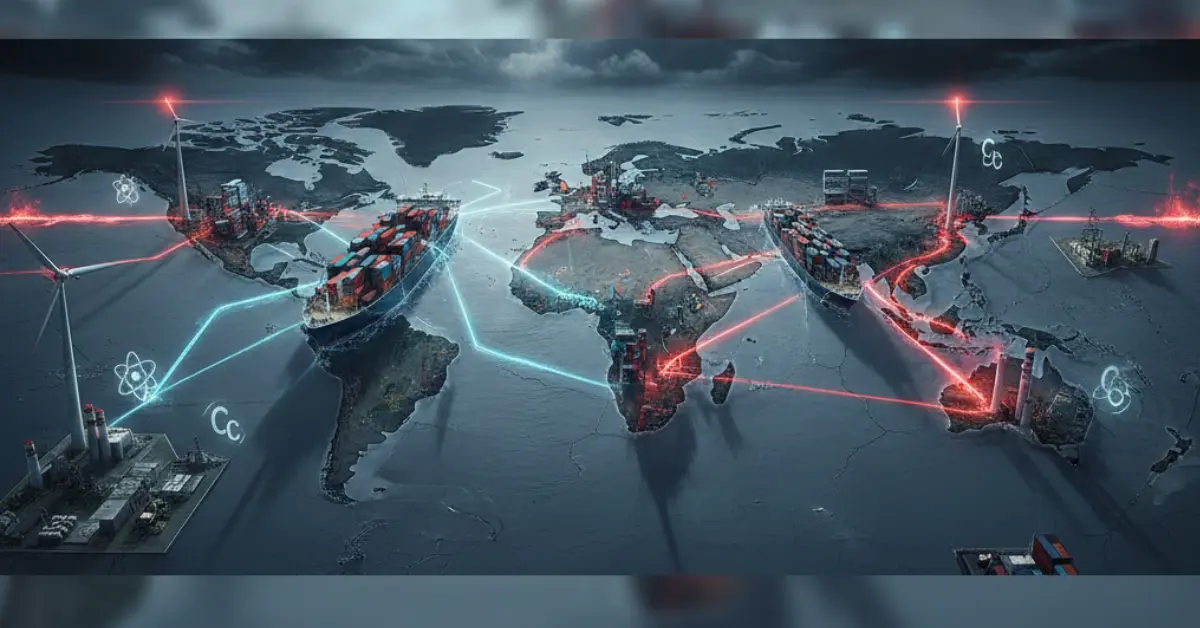
Illustration showing rising global trade tensions in 2026 with fractured trade routes, geopolitical blocs, cargo ships, and climate-driven trade barriers.

At a glance:

What’s happening: Global trade tensions in 2026 are accelerating after a brief post-pandemic calm.
Why now: Geopolitics, climate-linked trade rules, strategic industrial policy, and fractured supply chains are colliding.
What’s different this time: Trade is no longer just about prices and efficiency — it’s about power, security, and carbon.
Who’s most exposed: Export-dependent economies, climate-lagging manufacturers, and firms tied to single-bloc supply chains.
What comes next: A slower, more regulated, and politically charged era of global trade — not its collapse, but its redesign.

A world trading under pressure

In early 2026, cargo ships still glide through the Strait of Malacca, ports hum in Rotterdam and Shanghai, and spreadsheets still promise global efficiency. Yet beneath the choreography of commerce, the mood has shifted. This is no longer the age of frictionless globalization. It is an era of uncertainty — a fragile global economy navigating economic fault lines that have widened quietly, then all at once.

Global trade tensions 2026 are not erupting in a single dramatic moment. They are rising like a tide: slow, relentless, and difficult to reverse. Tariffs are creeping back into policy language. Export licenses are tightening. Climate rules are hardening into border taxes. And governments, from Washington to Brussels to Beijing, are openly redefining trade as a strategic weapon.

This is the return of rising trade conflicts — not as a replay of the last trade war, but as something more structural, more ideological, and far more enduring.

Why are global trade tensions increasing again?

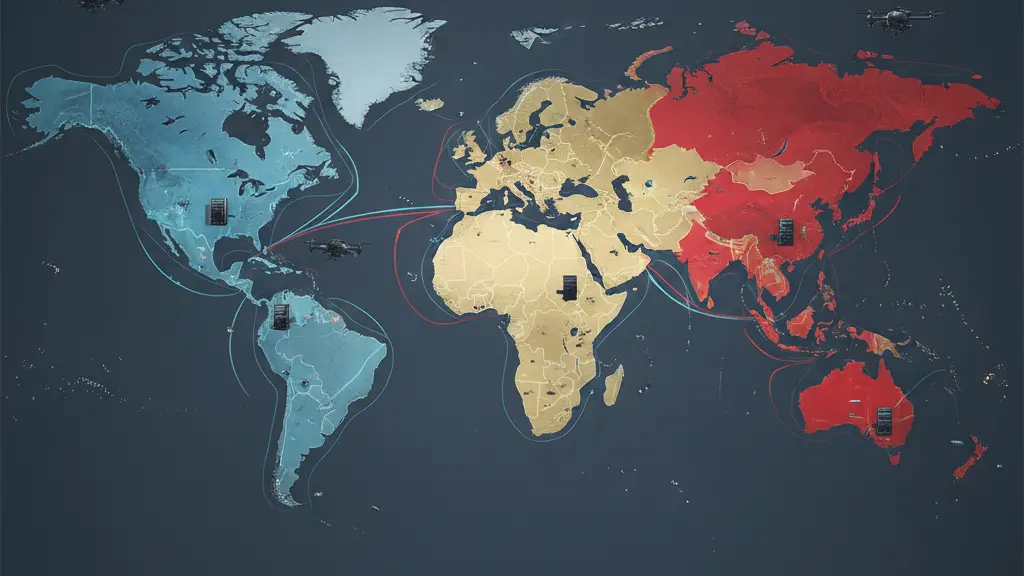
Geopolitical power shifts driving global trade tensions in 2026, showing divided trade blocs, US-China rivalry, and disrupted trade routes.

The short answer: trade has become inseparable from power.

The longer answer lies at the intersection of geopolitics and global trade, where security concerns, industrial ambition, and domestic politics now outweigh price signals. The US China trade rivalry never truly cooled; it merely changed form. Tariffs gave way to export controls, technology bans, and investment screening — subtler tools, but more potent.

At the same time, economic nationalism has gained legitimacy. Voters no longer see global supply chains as symbols of progress, but as vulnerabilities. Governments respond with strategic trade policy, prioritizing domestic resilience over global efficiency. Sanctions and trade restrictions, once exceptional, are now routine instruments of diplomacy.

This shift marks the emergence of a multipolar world economy, where trade flows increasingly follow political alignment. Bloc-based trade systems are forming — not officially, but functionally — reshaping how goods, capital, and technology move.

The quiet mechanics behind a noisy world

Unlike past trade wars, today’s conflict is often regulatory rather than rhetorical. Tariffs and trade barriers are being layered with export controls, climate standards, and security reviews. The result is regulatory fragmentation — a patchwork of rules that raise costs without ever announcing themselves as protectionism.

One of the clearest examples is the carbon border tax (CBAM) introduced by the European Union. Framed as climate policy, it functions as a trade filter, rewarding low-carbon producers and penalizing those without robust emissions accounting. Similar green tariffs are being debated elsewhere, signaling a future where climate policy and trade are inseparable.

Within a single manufacturing contract, firms now confront trade policy uncertainty that looks like this:

Policy lever

Intended goal

Trade-side effect

Export controls

National security

Supply chain disruption

CBAM / green tariffs

Decarbonization

Higher import costs

Industrial subsidies

Domestic jobs

Retaliatory disputes

Sanctions regimes

Geopolitical pressure

Market fragmentation

This is the anatomy of the WTO trade rules crisis: the system was built for tariff disputes, not carbon accounting, technology containment, or security-driven trade.


Supply chains: from efficiency to allegiance

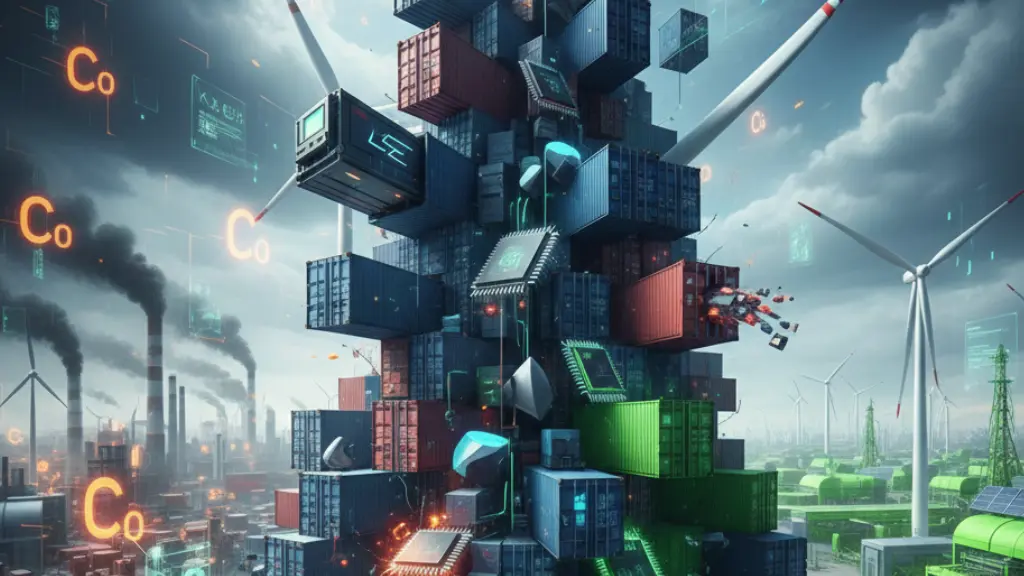
Supply chain fragmentation in 2026 driven by climate policy, green tariffs, EV batteries, semiconductors, and carbon-based trade rules.

For decades, globalization asked one question: Where is it cheapest to produce?
In 2026, the question is different: Where is it safest — politically, strategically, and environmentally?

Supply chain reshoring and friend-shoring strategy have moved from boardroom buzzwords to capital-allocation decisions. Companies are splitting production across regions, accepting higher costs to reduce exposure. The debate is no longer nearshoring vs globalization, but resilience versus margin.

Nowhere is this clearer than in critical sectors:

  • Semiconductor trade controls are redefining technology access.
  • The EV battery supply chain is being reorganized around critical minerals trade.
  • Energy trade security has become a national priority after years of geopolitical shocks.

These shifts don’t end trade — they redirect it. But redirection comes with friction, delays, and duplication, all of which feed into a global trade slowdown.

The economic cost of fragmentation

Trade tension is not an abstract policy debate; it shows up in prices, profits, and growth forecasts.

As supply chains fragment and compliance costs rise, global inflation pressures remain stubborn. The trade and inflation link is now well understood: tariffs and regulatory barriers act like hidden taxes. For export-dependent economies, especially in emerging markets, the cost of protectionism is immediate and painful.

Investment decisions are also changing. Capital hesitates when rules shift unpredictably. This global investment uncertainty dampens productivity gains and slows technology diffusion. The trade impact on GDP is subtle but cumulative — a half-percentage point here, a delayed factory there, until growth feels thinner everywhere.

The winners and losers are unevenly distributed, deepening perceptions of unfairness and reinforcing the cycle of international trade disputes.

Climate policy has entered the trade arena

Perhaps the most transformative force in 2026 is the fusion of climate policy and trade.

As governments pursue decarbonization, trade becomes an enforcement tool. Carbon pricing impact on trade is no longer theoretical; it is embedded in customs declarations. Sustainability trade barriers reward transparency, data, and clean energy — and punish opacity.

This marks the rise of green industrial policy, where subsidies, standards, and tariffs work together. For firms and countries that adapt, this is an opportunity. For those that don’t, climate-driven trade rules feel indistinguishable from exclusion.

Importantly, this is not a temporary phase. Decarbonization and trade will define competitiveness for decades, not election cycles.

Is globalization ending in 2026 — or evolving?

Despite the tension, this is not the end of globalization. It is its re-alignment.

The future of global trade looks slower, more regional, and more regulated — but also more intentional. The global trade outlook 2026 suggests adaptation rather than collapse. Supply chains will shorten, but they won’t disappear. Trade wars return in form, but not always in name.

The real risk is not deglobalization; it is unmanaged fragmentation. A world trade realignment without coordination increases volatility, mistrust, and inefficiency.

A silent trade war, hiding in plain sight

What makes 2026 distinct is how quiet the conflict feels. There are fewer dramatic tariff announcements, fewer podium speeches. Instead, trade friction is embedded in technical standards, data requirements, and security reviews — a silent trade war unfolding through paperwork.

This subtlety makes it more dangerous. Businesses adjust slowly. Consumers feel price pressure without understanding why. Policymakers respond domestically, not cooperatively. The result is a fractured global order that feels stable until it suddenly isn’t.

Trade tensions forecast: what happens next?

Looking ahead, three grounded scenarios dominate serious analysis:

  1. Managed fragmentation: Trade slows but stabilizes as rules become clearer.
  2. Escalatory blocs: Retaliation hardens into rival systems — the next global trade war in everything but name
  3. Selective cooperation: Climate and technology rules converge partially, easing pressure on global markets.


    Which path emerges depends less on economics and more on political will.

Trade as the mirror of our moment

Trade has always reflected the world it serves. In 2026, it reflects anxiety — about security, climate, inequality, and control. Why global trade tensions are rising again is ultimately a story about trust: who we trust to supply us, to regulate us, and to share the benefits of growth.

The era of cheap certainty is over. What replaces it will define prosperity for a generation.

FAQ — Global trade tensions in 2026

Why are global trade tensions increasing in 2026?
Because trade is now tightly linked to geopolitics, climate policy, and national security, not just economics.

Are trade wars coming back?
Yes, but in subtler forms — through regulations, export controls, and climate rules rather than headline tariffs.

How does geopolitics affect global trade today?
Geopolitical trade risks influence supply chains, investment flows, and access to technology across borders.

Is globalization ending in 2026?
No. It is fragmenting and realigning, not disappearing.

Who benefits from trade tensions?
Countries and firms that adapt early — with resilient supply chains and low-carbon production — gain relative advantage.

What is causing global trade fragmentation?
A mix of economic nationalism, climate-driven trade rules, and unresolved governance gaps in the global system.

Sagar Roy

Sagar is a contributing writer known for insightful coverage of global affairs, technology, and financial trends. With a background in news analysis and cross-border reporting, Sagar delivers timely perspectives on complex issues shaping today’s world. He is passionate about bringing clarity and depth to emerging topics in international politics, digital innovation, and business strategy.

Disclaimer:

Disclosure: This article is for general information only and is based on publicly available sources. We aim for accuracy but can’t guarantee it. The views expressed are the author’s and may not reflect those of the publication. Some content was created with help from AI and reviewed by a human for clarity and accuracy. We value transparency and encourage readers to verify important details. This article may include affiliate links. If you buy something through them, we may earn a small commission — at no extra cost to you. All information is carefully selected and reviewed to ensure it’s helpful and trustworthy.

7 responses

  1. […] YOU MAY LIKEWhy Global Trade Tensions Are Rising Again in 2026Why Trump’s $12B Farm Aid Could Spark a Dangerous U.S.–India Food RiftSpotify Wrapped 2025’s […]

  2. 52betwin Avatar

    52betwin, e aí, apostadores de plantão! Encontrei um site com umas apostas bem interessantes. Se você curte adrenalina, dá uma espiada! Acesse 52betwin.

  3. vietlottpower Avatar

    Vietlottpower… another Vietlott site! I hope I win the Powerball jackpot! This one could be worth checking weekly if you’re into that kinda thing. Dreams of wealth!!!: vietlottpower

  4. km88bet Avatar

    Yo, I was browsing and found km88bet. They’ve got a surprisingly good range of betting options – sports, casino games, the whole shebang! The odds seemed fair too. Maybe give it a go if you’re looking to place some bets. Check it out km88bet

  5. 777locbet Avatar

    777locbet, huh? Well, it’s got that lucky number vibe going on! They have a decent variety of games; I played a few slots and had some luck. See if your luck holds up! Find out more on 777locbet

  6. […] strikes, the amygdala fires faster than the prefrontal cortex can calculate probabilities, triggering fear-based decision making in markets before spreadsheets finish […]

  7. […] Nowadays everywhere in the world trade tensions are on rise. The central bank independence debate isn’t academic anymore. People ask who controls monetary policy when it shapes rent and groceries. Tension between central banks vs governments is structural: fiscal promises meet monetary limits. Transparency in monetary policy has become a trust technology. Without it, public trust in central banks erodes—quietly, dangerously. […]

Leave a Comment

The World’s Heartbeat, Billions Pulse exists to capture those beats — the rhythm of our shared human story.

Follow Us On Social Media

Get Latest Update On Social Media